The Context and Purpose of the Match
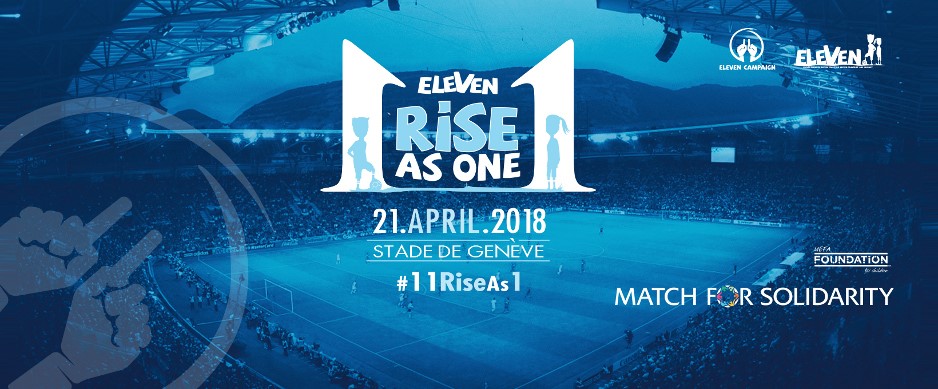
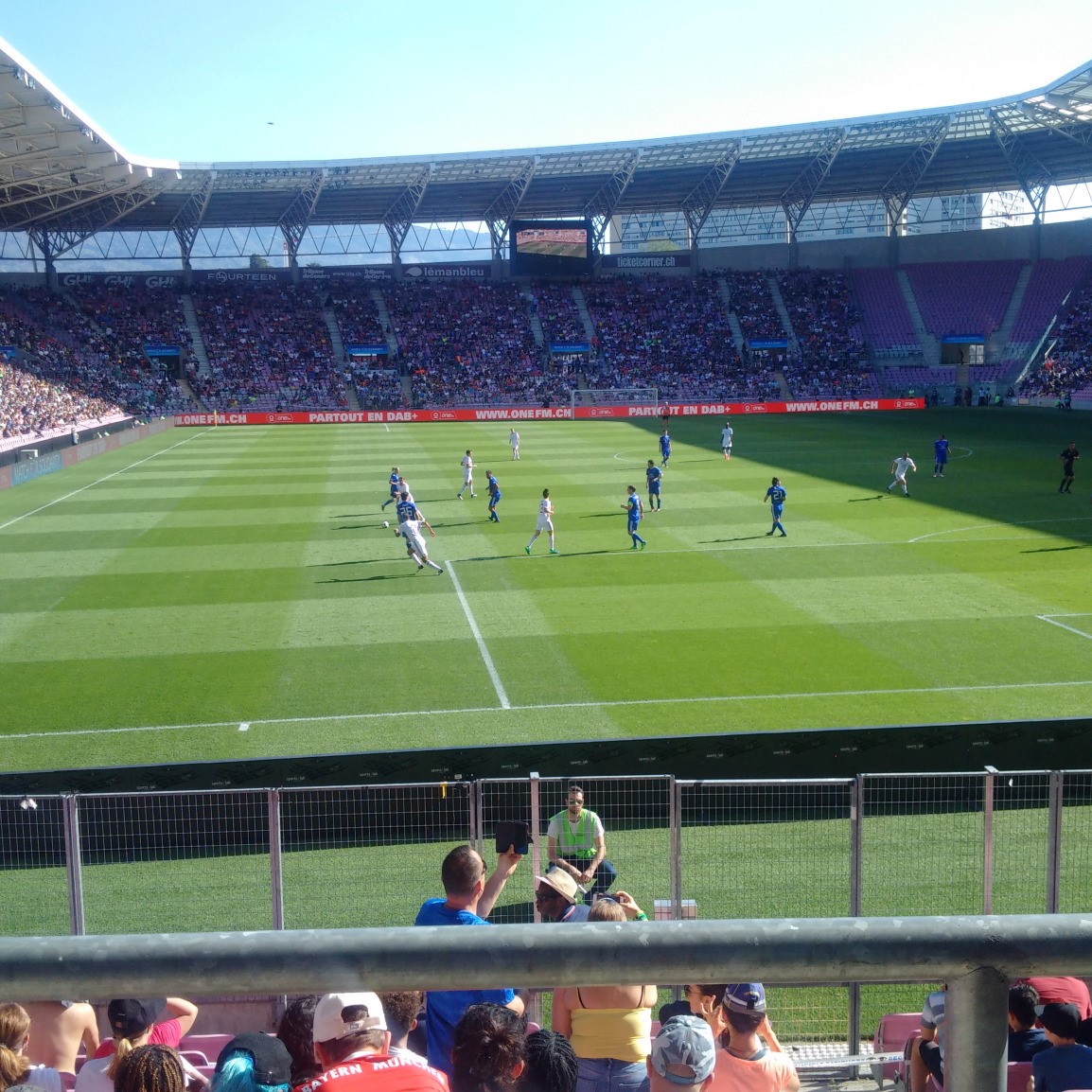
On Saturday 21st of April, I attended a special charity match at the Stade de Genève – the “Match for Solidarity” with men’s football legends Andrea Pirlo, Raul, Luís Figo, Ronaldinho, Robbie Keane, Henrik Larsson, Cafú, Rio Ferdinand and Christian Karembeu, together with three women’s football legends Kelly Smith, Casey Stoney and Célia Šašić. The fact that just three female football players were invited reflected how much women are under-represented in football.
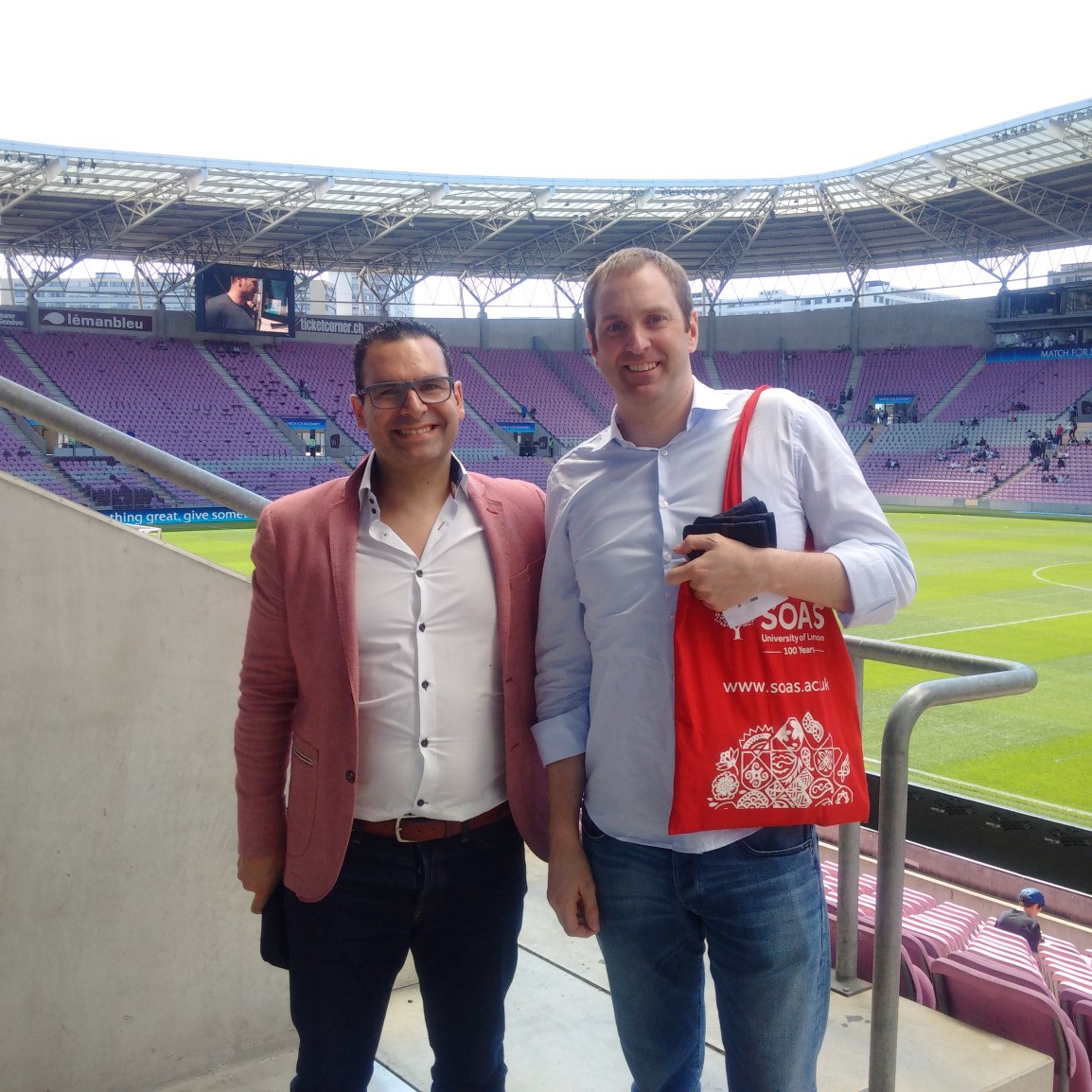
More than 23,000 fans from all ages, backgrounds and cultures filled most of the seats at the Stade de Genève. My reason for attending was as a football fan and as a guest of the Centre for International Studies and Diplomacyat SOAS University of London to help support their research on topics such us: Where does sport fit in global diplomacy?
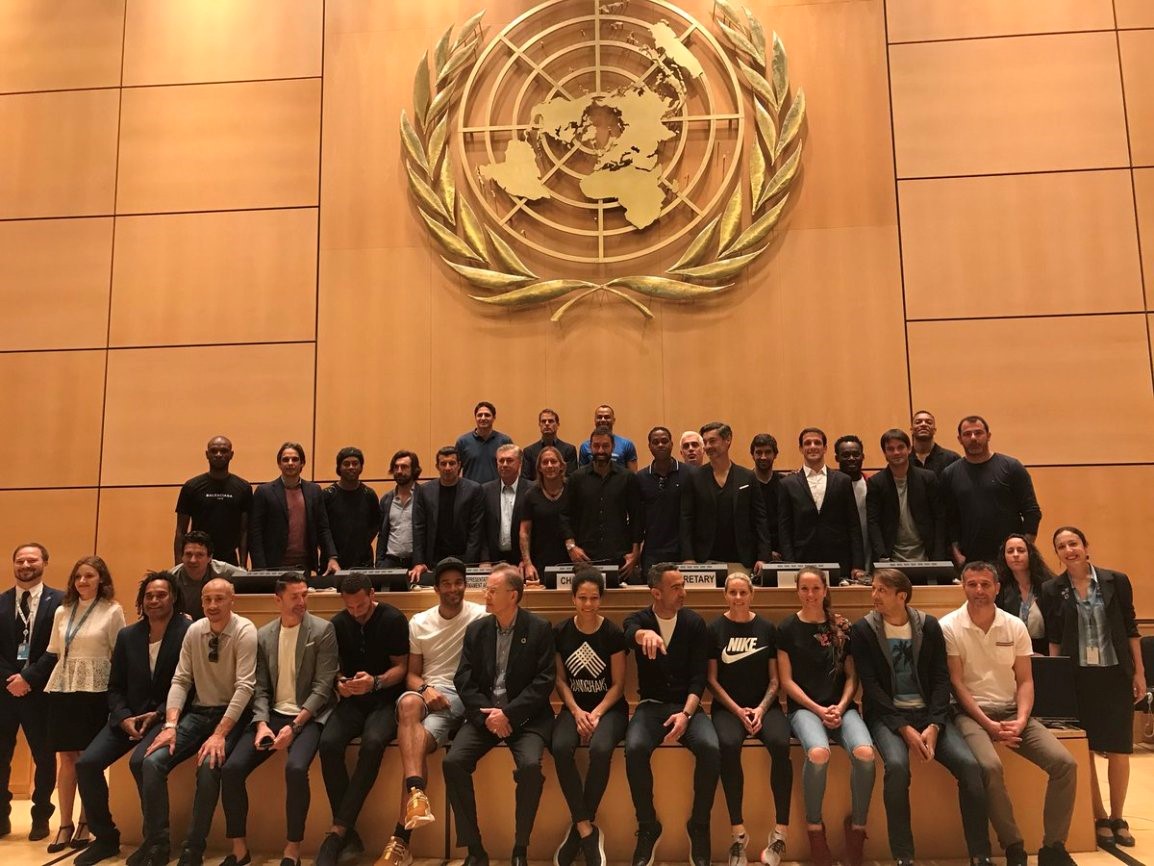
The proceeds from this event, as well as from a charity dinner and a unique digital football auction, went to the UEFA Foundation for Children a non-profit arm of UEFA created during the 38th Ordinary UEFA Congress in Astana in 2014 with the support of Michel Platini. The local beneficiary for this year was Autisme Genève, a non-profit organisation founded in Geneva in 2007 by parents of children with autism. This was a great initiative for a good cause but overall it felt that it could have had a much bigger impact among players, organisers, fans and the local community. For example, inviting world renowned actors, singers and top athletes from other sports to participate together with the football legends (as they did at Soccer Aid for Unicef 2018).
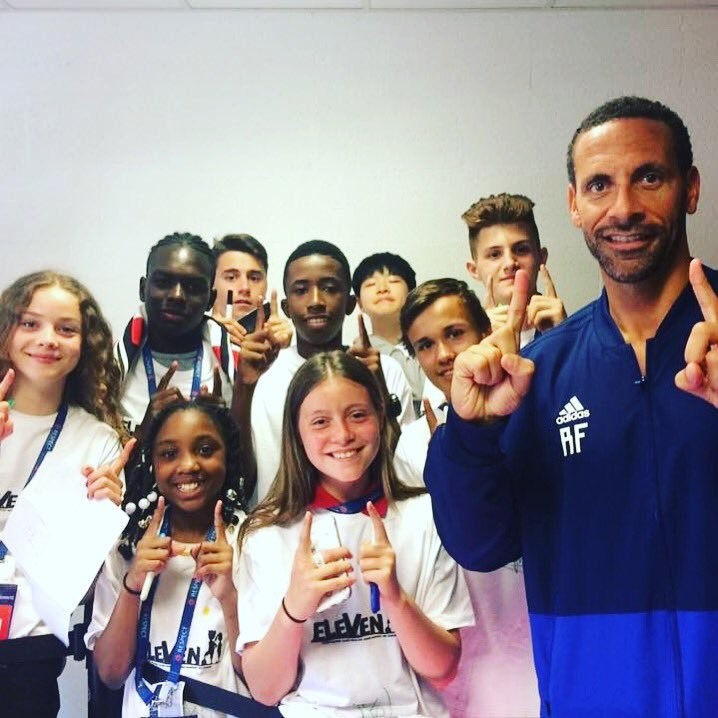
During the pre-match, The Eleven Rise As One game took place ahead of the Match for Solidarity. This brought together 11 children from 11 different countries, who meet for the first time on the day to form a football team and play a 30-minute match. Their opponents were a team of 10- to 15-year olds with at least 11 different origins. The Eleven Rise As One game was organised by the Eleven Campaign, a non-profit organisation behind the Eleven film project: Can Football Unite the World? to raise awareness on social media with their hashtag #jointhe11. For me this Eleven Campaign pre-match event was the real #MatchForSolidarity.
The Fan Experience
Tickets for the match were reasonably priced for young fans and families at CHF 10, CHF 17 and CHF 22 (between £7.30 and £16.15), and were available for online purchase at ticketcorner.ch after a few clicks and an easy registration process. Tickets were also available for purchased on the day at the Stade de Genève. My ticket was purchased online, and therefore ticketcorner.ch had the opportunity to send me via email a quick post-match fan online survey. My experience and score coincides with the experience from more than 50 fans: average 3.8/5 score – a great event for a good cause but one that could have been better.
Everyone involved in the event was active on social media, including players, organisers and sponsors such as @UEFA @UEFA_Foundation@ChampionsLeague @UEFAWomensEURO @UWCL @Hublot @UN@UNGeneva and @Eleven_Campaign. 184,000 fans followed the match online on Facebook Live (which is not bad compared to the 10,952 fans who viewed the Marseille v Atletico Madrid: UEFA Europa League Final 2018 on BT Sport in UK), and some European countries provided free to air broadcast on their national TV channels.

UEFA launched a digital auction where fans could bid for exclusive pieces of memorabilia (including signed jerseys and balls) and was very successful according to the organisers. Unfortunately, I did no receive any information about it before or after the match. The message from organisers to the fans was: “You’ll be showing your support for charities that benefit children with disabilities”. A charity dinner in Geneva after the match added to the funds generated by UN Geneva and UEFA. UEFA Foundation for Children could have kept a live website or landing page were fans can donate even now months after the event (as they did at Soccer Aid for Unicef 2018).
As a fan, I did not receive any travel information in advance of the match. The ticketing website had the stadium address but very little information on how to travel there. The Stade de Genève website had information on transport linksbut did not mention how to get to the stadium from the different nearby transport links. There was also no information related to travel on the tickets. A First Time Fan guide would have been helpful.
We landed in Geneva via plane from London and at Geneva airport there were some big screens advertising the match as part of City of Geneva’s marketing strategy which I thought was a nice touch, and a good photo opportunity. Unfortunately, the organisers seemed to assume that all fans attending would be local to Geneva – which for an international match involving world stars – seemed strange to me. We headed to the stadium via public transport. Upon arrival at the nearest stop to the stadium, there were no signs or directions. We followed a group of families and walked for around 10 minutes before we arrived at the shopping centre adjacent to the stadium. The queue was so long that it started inside the shopping centre.
We were in this queue for about 20 minutes, but nobody seemed to be managing it and it wasn’t clear if you could enter from a different gate and join another queue. By the time we approached the gate we were given a free bottle of cold sparkling water which was appreciated in such a hot day.
Unfortunately, we were so close to going through Security that staff members then took the bottles away before we had been able to drink them! We then found that the gate was divided into 6 queues, but nobody informed us why – women were only allowed to get in through the gates with female security staff, but there were only 2 of those. It was pretty chaotic. It would have been good to have both male and female security staff at each queue, and for the queues to have been properly managed, to make the process seamless and not frustrating for fans.

There were various food carts and bar tents just outside the perimeter of the ground with different types of food and some vegetarian options; however, they did not accept card payments. This was particularly problematic for those of us who had travelled from outside Switzerland and didn’t have swiss francs (CHF) in cash. The only cashpoint nearby was inside the shopping mall outside the stadium, but unfortunately fans were not allowed to go out and get back in. The selection of drinks inside the stadium was small and expensive. We bought two Coca-Colas and paid 10 CHF (approximately £7.60) which is the same price as the cheapest match ticket. The food selection inside the concourse was basic and again the outlets did not accept card payments.
We found our seats without a problem but realised that the pre-match event between the @Eleven_Campaign team and the local team was being played on the other half of the stadium so we headed there. The event day staff were engaging, proactive in most cases and some spoke very good English. Stewards situated at pitch level struggled to control kids jumping onto the pitch to meet their idol Ronaldinho. The main goal for attending fans was to see, hug and cheer their football idols. The atmosphere at the stadium was great at the start of the match and it was sustained at times with some music; however, the quiet periods outweighed the cheering. The female players provided lots of action on the pitch in contrast to the majority of male players who, despite being legends, were visibly past their peak fitness. The final score was 4-3 but there could have been even more goals.
My reflections
The purpose of the match for the UEFA Foundation for Children and for UN Geneva was to raise funds for multiple projects that support unprivileged children around the world. According to UEFA President Aleksander Čeferin and Michael Møller, Director-General of the United Nations Office in Geneva this was successfully achieved. This event also aimed to promote solidarity for peace, rights and well-being through United Nations’ Sustainable Development Goals, and it did this partly in my opinion. However the impact would have been stronger if, for example, the stadium had signposted information about the digital auction of the UEFA Foundation for Children or merchandise to raise more funds. It would have been beneficial to have some Ambassadors from UN Geneva at the stadium talking to fans about how the match helped ‘Reducing Inequalities’ (one of the UN Sustainable Development Goals) and how fans could get involved. There could have been some information screens or leaflets on how to contribute to the Eleven Campaign online after the match.
As highlighted above, the fan experience at the ‘Match for Solidarity’ could have been better, female players could have played a bigger role and organisers missed the opportunity to engage 23,000-plus fans to continue supporting their great initiatives as no contact details were collected on the day. This could have been easily done, for example, an online competition giving away a t-shirt signed by the players or by encouraging fans to share their experiences and stories from the match on the UEFA Foundation for Children’s social media channels. This would have also offered fans the possibility to donate more funds to this charitable organisation as well as give useful feedback. Without this customer data, UEFA Foundation for Children and UN Geneva have not been able to send a fan experience survey and only ticketcorner.ch gathered some basic feedback, which is a shame. Having fans’ details would help organisers build the momentum and stay connected with fans in the lead up to next year’s Match for Solidarity or it could simply take them to the UEFA’s online auction.
To summarise, the ‘Match for Solidarity’ was a great initiative and I enjoyed the experience. However, we left the stadium wondering how much we as fans had actually contributed to the event’s goals of promoting solidarity. Overall, I feel that the event organisers missed a great opportunity to leave a real solidarity legacy in Geneva, amongst the 23,000-plus fans that attended, the hundreds of thousands that watched on TV, and the football legends.
 Jose Gigante DipPFS, FRSA